
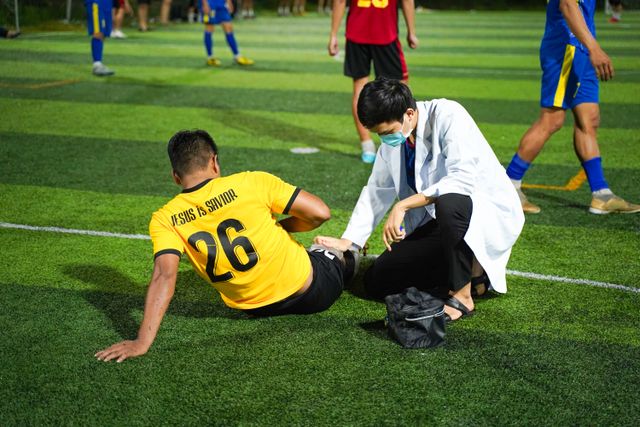
Whether you are a professional athlete, a fitness enthusiast or enjoy playing cricket or football on the weekends, a sports injury can be a frustrating experience. Most people's first question is very basic: "How can I get better as fast as possible?" There is no magic fix, but the good news is the right recovery can shorten the healing time considerably and get you back to your sport stronger than you were.
Fast recovery is not about being on bed rest all the time or just depending on pain medication, contrary to popular belief. It's about the right diagnosis, early rehabilitation and letting your body heal with guided movement.
Why Faster Recovery Is Not About Healing Faster
One of the biggest misconceptions athletes have is that once the pain is gone, they can return to training. In fact, pain is only part of the healing process — even if the pain disappears, muscles, ligaments, tendons and joints are still healing. Coming back too soon often puts stress on tissues that haven't regained their full strength, making re-injury more likely.
That's where evidence-based physiotherapy really comes into its own. Rehabilitation is not just about easing pain; it is about treating the cause of the injury, restoring movement, rebuilding strength and preparing the body to return to the physical demands of sport safely.
What Happens to Your Body After a Sports Injury?
Sports injuries trigger a natural healing process. First, your body sends blood and specialised cells to the area, causing swelling and inflammation. While these symptoms might feel concerning, they are essential for tissue repair.
The damaged muscles, ligaments or tendons begin to rebuild as healing occurs. But this new tissue is often initially less flexible and less strong. If not properly rehabilitated, it may heal with stiffness, loss of mobility or poor movement patterns, increasing the chances of future injuries. That's why it's important to work with a qualified sports physiotherapist in Ahmedabad who guides you through a structured program to regain flexibility, stability, strength and confidence at every stage of healing.
What Makes You Recover Quicker?
Each injury is unique, but some principles of recovery consistently give better results:
- Initial professional assessment — early examination helps find the exact cause of the problem before it gets worse.
- Begin physiotherapy as soon as possible — early physio promotes healthy tissue healing, circulation and prevents stiffness.
- Go safely — complete rest is seldom the best solution; controlled movement under supervision prevents joints seizing up.
- Proper nutrition and sleep — your body needs protein, vitamins, minerals, hydration and restorative sleep to repair tissue.
- Adhere to your rehabilitation plan regularly — consistency is one of the most underestimated factors in safe, quick recovery.
The Role of Physiotherapy in Sports Injury Recovery
Physiotherapy is far more than a set of exercises — it's a comprehensive, scientifically grounded rehabilitation program. An experienced physiotherapist looks for the cause of the injury rather than just treating symptoms, assessing joint range of motion, muscle strength, flexibility, posture, balance and movement patterns before building a plan that evolves as you heal.
The best sports physiotherapists in Ahmedabad typically combine manual therapy, corrective exercises, sport-specific strengthening and functional training — an approach that speeds recovery while also improving athletic performance.
Signs You Are Ready to Return to Sport
Your return to sport should always be based on functional readiness, not just an absence of pain. Before offering clearance, a physiotherapist will usually assess:
- Full, pain-free range of motion
- Muscle strength compared with the uninjured side
- Good coordination and balance
- Comfortable running, jumping, cutting and sport-specific drills
- Confidence when performing athletic movements
Mistakes That Hamper Recovery
- Playing through pain
- Not doing the rehab exercises as prescribed
- Relying on painkillers alone
- Returning to sport without professional clearance
- Skipping warm-up, stretching and recovery
Key Takeaway
Getting back to sport fast after an injury is not about shortcuts; it's about having the right strategy from the start. Early diagnosis, evidence-based physiotherapy, progressive rehabilitation, appropriate nutrition and rest all work together to get your body back up and running efficiently, with the least chance of re-injury.
Whatever the cause of your musculoskeletal condition — a muscle strain, ligament injury, tendon problem or post-surgical rehabilitation — a tailored treatment plan will always produce better results than a one-size-fits-all approach.